73 hand-written game histories.
Not a compatibility list — each card is a hand-written history of why the game matters, how it runs on Apple Silicon, and how to get it legally. Velocity plays far more than 73 games. These are the ones worth reading about.
73 games
Dragon's Lair
1983 · Don Bluth / Advanced Microco…
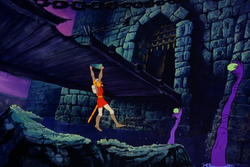
Directed by Don Bluth — the same animator behind The Secret of NIMH and The Land Before Time — Dragon's Lair cost $0.50 to play in 1983, when every other arcade game cost a quarter. The cabinet streamed full hand-drawn cel animation from a Sony LaserDisc player in real time. You didn't play a video game. You played a cartoon.

Space Ace
1984 · Don Bluth / Advanced Microco…
Space Ace introduced a mechanic Dragon's Lair didn't have: Borf's Infanto Ray transforms hero Ace between his adult self and his teenage alter ego Dexter, changing which moves are available. Produced simultaneously with Dragon's Lair using the same animation team and LaserDisc production pipeline, Space Ace pushed the technology further — more animation, more branching paths, more cartoon per quarter.

Pac-Man
1980 · Namco
Toru Iwatani designed Pac-Man to attract women to arcades — the concept came from imagining a pizza with a slice removed. It became the highest-grossing arcade game of the 1980s, the first video game character to receive a major merchandise licensing deal, and the first game to have a documented pattern strategy. The ghosts each have distinct AI: Blinky chases directly, Pinky aims ahead of you, Inky uses a vector calculation, Clyde runs away when too close.

Donkey Kong
1981 · Nintendo
Donkey Kong was Shigeru Miyamoto's first game, designed to rescue Nintendo's struggling US operation after Radar Scope failed in American arcades. The running man was called Jumpman. His enemy was a giant ape. The woman he was rescuing was Pauline. Two years later, Jumpman had his own name — Mario — and his own game. Donkey Kong is where the entire Nintendo universe begins.
Space Invaders
1978 · Taito
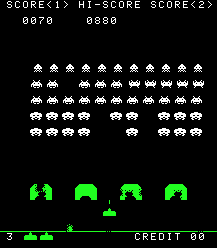
Tomohiro Nishikado designed the aliens because he couldn't animate human figures running convincingly on the hardware. Space Invaders became so successful in Japan that it caused a nationwide shortage of 100-yen coins, prompting the Bank of Japan to quadruple production. It is the reason arcade gaming became a global industry. The descending rows speed up as you destroy them — not by design, but because the processor runs faster with fewer sprites to track. Nishikado left the emergent mechanic in.

Galaga
1981 · Namco
Nobody expected the sequel to Galaxian to be better than the original, but Galaga's dive-bombing formations, dual-ship capture mechanic, and bonus challenge stages turned it into one of the most-played arcade games of all time. Competitive players discovered early that letting the stage-one boss drone capture your ship — intentionally sacrificing a life — allows you to rescue it and play with two ships simultaneously. The game rewards obsession.

Street Fighter II
1991 · Capcom
Street Fighter II didn't invent the fighting game, but it invented everything that matters in one cabinet: the six-button layout, special moves executed with directional inputs, eight distinct characters with rivalries and personality. Every fighting game released in the 30 years since traces its DNA directly here. The competitive scene that exists today — EVO, professional players, global tournaments — began in arcades around Street Fighter II cabinets in 1991.
Mortal Kombat
1992 · Midway
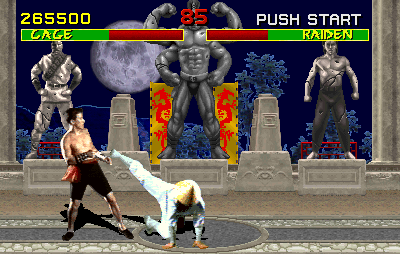
Midway built Mortal Kombat specifically to be more violent than Street Fighter II. Digitized actors, photorealistic blood, and Fatality finishing moves so graphic they prompted Congressional hearings and the direct creation of the ESRB rating system. The controversy sold the game. The arcade version's home port to Sega Genesis outsold the censored SNES version 3:1 because Genesis had the blood code and SNES didn't.
Gauntlet
1985 · Atari Games
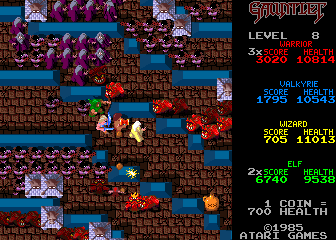
Gauntlet was the first arcade game designed for four simultaneous players — each with their own joystick, their own health bar, and their own quarter slot draining in real time. 'Elf needs food badly' entered the cultural vocabulary permanently. The narrator's callouts — 'Warrior is about to die', 'Blue Valkyrie, do not shoot the food' — turned a dungeon crawler into improv comedy. No single arcade cabinet before Gauntlet generated social interaction the way Gauntlet did.

Asteroids
1979 · Atari
Ed Logg's Asteroids used vector graphics not for aesthetics but necessity — raster displays couldn't render that many simultaneously moving objects fast enough. The result accidentally created one of the most distinctive visual identities in gaming. The score counter topped out at 99,999 points; players who reached the limit had to stop or reset. Bill Mitchell reportedly accumulated over 8 million points in a single sitting. The saucer that hunts you when you're the last asteroid is why.

Defender
1981 · Williams Electronics
Eugene Jarvis designed Defender in 1980–81 and nearly broke Williams Electronics in the process — the game was so complex to program that production was nearly cancelled three times. The result was the most demanding arcade game of its era: a scrolling shooter with a scanner minimap, six buttons, thrust-based physics, and waves of enemies specifically designed to punish inattention. Most players died in under 60 seconds. Defender was the game that proved difficulty was itself a feature.

Tempest
1981 · Atari
Dave Theurer designed Tempest to capture a recurring nightmare: monsters crawling up out of a hole toward him. The game uses a rotary spinner controller, vector graphics, and abstract geometric enemies that claw their way up the playfield toward your claw at the rim. No other arcade game from 1981 looks or feels anything like Tempest. The color vector display, the spinner's physical feedback, the geometric abstraction — it arrived fully formed from a specific fever dream.
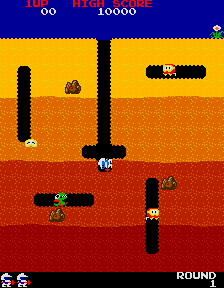
Dig Dug
1982 · Namco
You inflate enemies with an air pump until they explode. That is the entire combat system. Dig Dug is a game of perfect violence executed in the silliest way imaginable — the enemies puff up, they wobble, they pop. The underground terrain creates a physics sandbox where rocks can be manipulated into traps. For something this simple, the strategic depth is absurd. Namco's 1982 masterpiece still plays as well as anything made in the decade that followed.

Joust
1982 · Williams Electronics
You joust on an ostrich. Your opponents ride buzzards. Victory goes to whoever's lance is highest at the moment of impact. Joust's physics are genuinely unusual — altitude and horizontal momentum interact in ways that feel strange until they suddenly feel intuitive, and then feel like a language. Two-player cooperative mode was a revelation in 1982: two players on screen simultaneously, trying to work together, accidentally killing each other constantly.
Centipede
1980 · Atari
Atari's most successful upright cabinet, designed by Ed Logg and Donna Bailey — one of the first games designed in part by a woman. The trackball input was chosen specifically to create a different physical experience from joystick games, and it worked: Centipede became one of the first arcade games to draw a significant adult female audience, in an era when arcades were almost exclusively teenage boys.
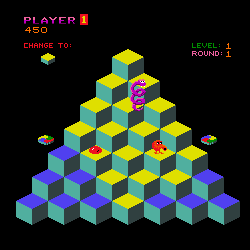
Q*bert
1982 · Gottlieb
Q*bert hops down an isometric pyramid changing the color of each cube while avoiding enemies. The designer Warren Davis almost quit before finishing it — the gameplay felt too random, too frustrating. He stayed. Q*bert had his own Saturday morning cartoon, his own line of plush toys, and his own dedicated speech synthesizer chip in the cabinet that produced his distinctive on-screen swearing when he fell off the pyramid.
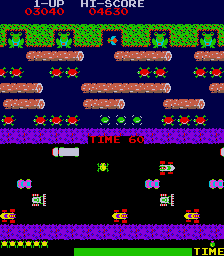
Frogger
1981 · Konami
Cross the road without getting hit by traffic, then cross the river on logs and turtles without falling in. That is the entire game. Frogger is one of the purest arcade designs ever made — an exercise in timing, risk assessment, and spatial awareness that never requires explanation. The difficulty curve is ruthless. The concept is completely obvious. Nobody had thought of it before 1981.
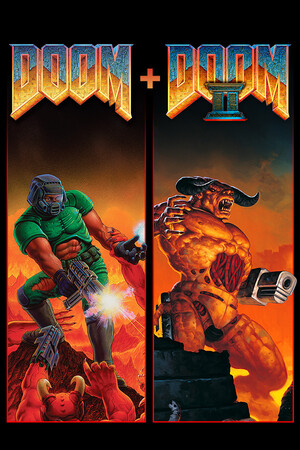
Doom
1993 · id Software
John Carmack's BSP rendering engine made Doom's world feel three-dimensional on hardware that was technically 2D. id Software released the shareware episode for free and sold the full game by mail order — a distribution model that changed how software was sold. The modding tools shipped with the game. Doom is simultaneously a perfect action game, a technical landmark, and the origin point of modern online distribution.
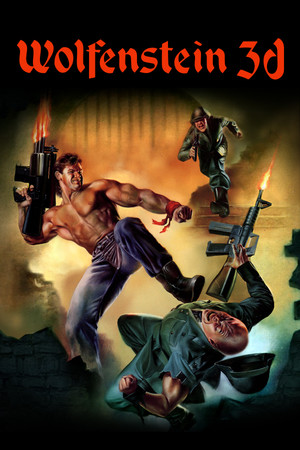
Wolfenstein 3D
1992 · id Software
John Carmack's ray casting engine turned flat 2D map data into a convincing 3D environment fast enough to run on a 286 CPU — which nobody believed was possible. You are B.J. Blazkowicz escaping a Nazi castle with a stolen machine gun. Wolfenstein 3D invented the first-person shooter template that Doom would perfect and Quake would transcend. The shareware episode was downloaded millions of times and triggered the first serious wave of moral panic about video game violence.
Quake
1996 · id Software
Where Doom used tricks to simulate a 3D world, Quake built one — real polygon models, true 3D geometry, dynamic lighting, rooms above rooms. John Carmack's engine made network multiplayer deathmatches over the internet viable for the first time, launching online competitive gaming as a concept. Trent Reznor composed the ambient soundtrack. id Software released the source code in 1999. The modding scene produced Team Fortress, which became its own franchise.

Prince of Persia
1989 · Brøderbund
Jordan Mechner rotoscoped his brother running and jumping on 16mm film, then hand-traced each frame into Apple II pixels — creating animations so fluid they looked impossible on the hardware. Prince of Persia invented cinematic movement in games: weight, momentum, the visual grammar of a body in motion. Every game that followed with physics-based jumping — Mirror's Edge, Assassin's Creed, Celeste — traces the principle back here.

Commander Keen
1990 · id Software
Before id Software made Doom, four developers — John Romero, Tom Hall, Adrian Carmack, and John Carmack — built the first episode of Commander Keen in 72 hours as a demo for Apogee Software. The demo proved that smooth side-scrolling was possible on PC hardware, which everyone in the industry believed was impossible. Apogee published it by shareware. Commander Keen became a hit and gave id Software the runway to build Wolfenstein 3D.
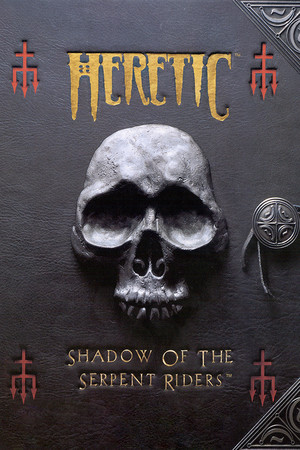
Heretic
1994 · Raven Software
Raven Software took Doom's engine and built a dark fantasy world on top of it — wizards instead of marines, gargoyles instead of demons, tomes of power instead of berserker packs. Heretic shipped the same year Doom II did and matched it in ambition: six episodes, an inventory system, a hub city. The shareware episode is legally free. Velocity bundles it because it's one of the best free first-person games ever made and almost nobody plays it anymore.
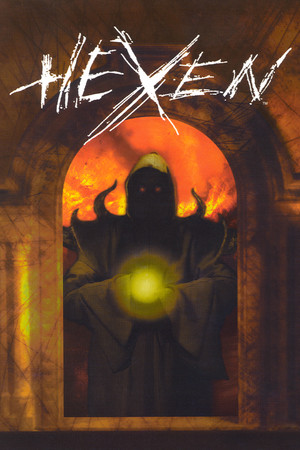
Hexen: Beyond Heretic
1995 · Raven Software
Hexen took everything Heretic built and made it darker, harder, and stranger. Three classes — Fighter, Cleric, Mage — each with four weapons and completely different combat styles. The hub map meant leaving a level didn't mean it was over. Raven packed environmental puzzles, scripted events, and true interconnection between zones. It's the most mechanically sophisticated id-engine game ever shipped, and it's almost never discussed. The shareware demo includes the entire first hub.
Quake II
1997 · id Software
Quake II was the engine that powered Medal of Honor, Soldier of Fortune, and Half-Life before Valve rewrote it. id Software shipped it as a complete departure from the gothic horror of Quake I — industrial Strogg facilities, connected hub levels, a narrative thread. It ran at 60fps on an MMX Pentium with hardware acceleration. The shareware demo includes three full levels from the first unit. The 2023 Nightdive remaster added ultrawide, modern controls, and a new expansion.

Tyrian 2000
1999 · Eclipse Software
Epic MegaGames published Tyrian in 1995. When the series ended, they released the full game as freeware in 2004 — including Tyrian 2000, the expanded final version. It has a story, branching paths, dozens of ships, hundreds of weapon combinations, and a full campaign that takes around eight hours. For a vertical shooter from 1995, that's extraordinary. OpenTyrian is the open-source port. Velocity ships the DOSBox version alongside it.

Dangerous Dave
1990 · John Romero
John Romero wrote Dangerous Dave for the Apple II in 1988. The DOS version came in 1990 on Softdisk's Big Blue Disk subscription service. It's a side-scrolling platformer with a jetpack, a gun, and ten levels of increasing cruelty. What makes it interesting is what came after: Romero used a PC version of Dave's engine to demo smooth side-scrolling to Nintendo of America as a pitch for a Super Mario Bros. port. Nintendo passed. That demo instead became Commander Keen. Dangerous Dave sits at the root of everything id Software built.

Jazz Jackrabbit
1994 · Epic MegaGames / Arjan Bruss…
Clifford Bleszinski — then 17 years old, later the designer of Gears of War — co-designed Jazz Jackrabbit for Epic MegaGames. It was Epic's answer to the platform wars: a fast, colorful, PC-exclusive side-scroller that could compete with Sonic on Sega. Jazz runs. Jazz jumps. Jazz shoots things with a blaster. The shareware episode was downloaded millions of times. It's the earliest evidence of what Cliffy B would spend his career building: games that feel good to move through at speed.

Crystal Caves
1991 · Apogee Software
Apogee Software invented the shareware model for games — release the first episode free, sell the rest by mail order. Crystal Caves is one of their best: a mining platformer where Mylo the alien collects crystals to fund his retirement. It has three full episodes, 60+ levels, and tight platform mechanics. Apogee released the full game as freeware in 2018. Velocity bundles it as a perfect example of what Apogee did before anyone else knew the shareware model would change the industry.

Duke Nukem
1991 · Apogee Software / 3D Realms
Before Duke Nukem 3D made Duke a one-liner machine, he was a side-scrolling action hero with a blaster and a jetpack — and Apogee's most technically impressive game of 1991. The scrolling engine was smoother, the level design denser, the challenge steeper than Commander Keen. It established Duke as a franchise and Apogee as the dominant shareware publisher of the early 90s. The shareware episode is completely free and holds up as a sharp, fast platformer that most people have never played.

Jill of the Jungle
1992 · Epic MegaGames / Tim Sweeney
Tim Sweeney — later the founder of Epic Games and the Unreal Engine — programmed Jill of the Jungle in 1992. It shipped as Epic's first major shareware release: a three-game trilogy where Jill, a warrior woman, fought through jungle, desert, and dungeon environments with a throwing knife. Epic released all three episodes as freeware in 2007. Sweeney's engine work is visible in the scrolling quality and the sprite animation — the technical foundation that would lead, eventually, to Unreal.

Commander Keen: Keen Dreams
1991 · id Software
Keen Dreams was id Software's obligatory game for Softdisk — the company they were leaving to start id. They knocked it out quickly, gave it to Softdisk to fulfill their contract, and moved on to Commander Keen Episode 4. For 28 years it was the hardest Keen game to find legally. In 2019, the rights holder released the full source code under the GPL. Velocity compiles it from source and bundles it — which means it's the only version of Keen Dreams that runs at native resolution on Apple Silicon.

Super Mario Bros.
1985 · Nintendo
Miyamoto designed the first level of Super Mario Bros. to teach the entire game's language without a single word of instruction. The first mushroom is impossible to miss. The first Goomba is impossible to avoid without jumping. The pipe leads somewhere. Every design principle cited in modern game tutorials traces back to World 1-1. It shipped to revive a crashed American game market. It worked.
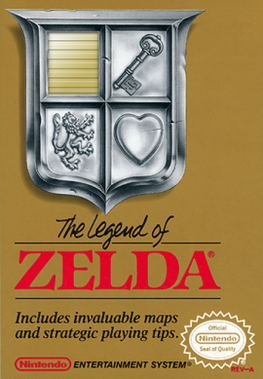
The Legend of Zelda
1986 · Nintendo
The Legend of Zelda shipped in a gold cartridge with a battery-backed save system at a time when games simply didn't save — you memorized passwords or started over. Miyamoto designed a world you could explore in any order, built secrets into every screen, and created a franchise that still defines what an adventure game should be. The instruction manual was deliberately incomplete. The secrets were for players to find and share.
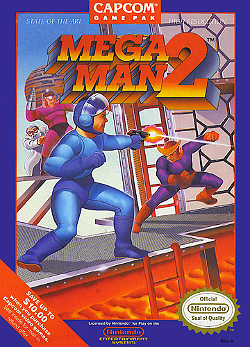
Mega Man 2
1988 · Capcom
The original Mega Man sold poorly enough that Capcom considered cancelling the franchise. A small team built Mega Man 2 in their spare time — nights and weekends — over Capcom's objections. It sold three million copies and established the template the series has used for 35 years: stage select screen, eight bosses, absorbed weapons, a wily fortress finale. The soundtrack, composed by Takashi Tateishi, is one of the most studied game scores ever written.

Metroid
1986 · Nintendo
Samus Aran was kept gender-ambiguous throughout Metroid's development — the ending reveal that she was a woman was intentional, unprecedented, and earned through completion time. Metroid gave players a planet to explore, power-ups that unlocked new areas, and no map. The isolation was deliberate. The genre the game spawned — Metroidvania — is named after it and Castlevania jointly, and is one of the most active indie design spaces today.

Contra
1988 · Konami
The Konami Code — up up down down left right left right B A — became the most famous cheat code in gaming history because of Contra. It gave you 30 lives, which you needed, because Contra is a two-player run-and-gun that kills you in a single hit and never apologizes. The game itself is perfectly calibrated co-op action. The code is cultural vocabulary. Together they made Contra the defining NES multiplayer experience.
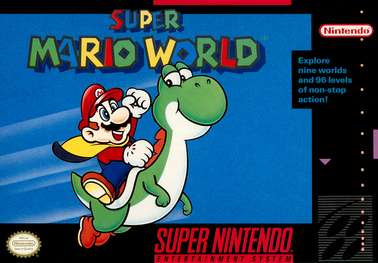
Super Mario World
1990 · Nintendo
The Super Nintendo launched with Super Mario World and immediately had the best launch title in console history. Yoshi's debut. The cape that let you fly. The Star World and Special Zone secret routes that doubled the game's scope. Super Mario World has been completed in under 43 seconds by speedrunners exploiting credits warp glitches, which only makes the question of what Nintendo shipped in 1990 more impressive.

The Legend of Zelda: A Link to the Past
1991 · Nintendo
A Link to the Past doubled Zelda's world with a single mechanic: the Dark World, a corrupted mirror image of Hyrule that turns the familiar into the threatening. Every location has a twin. The story twist that recontextualizes the Light World mid-game was one of the most sophisticated narrative moves in gaming at that point. It's the entry most Zelda fans point to as definitive — a 16-bit masterpiece that has never been surpassed within its format.
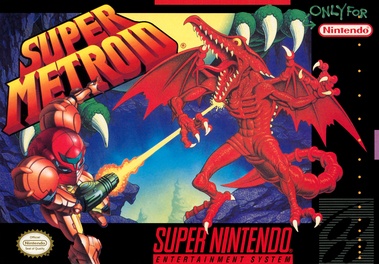
Super Metroid
1994 · Nintendo
Super Metroid never explains itself. The planet Zebes is handed to you — a map, a beam, a silent protagonist — and the game expects you to figure it out. The environmental storytelling, the oppressive atmosphere, the final sequence with the baby — Super Metroid tells its story entirely through architecture and sound. The speedrunning community still discovers new routes. Any% world record is under an hour. The game takes most players 10.
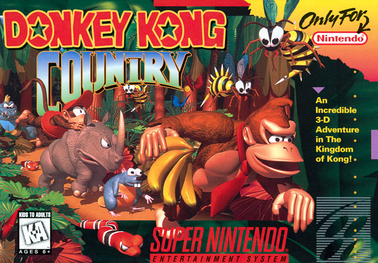
Donkey Kong Country
1994 · Rare
Rare used Silicon Graphics workstations to render fully 3D characters and environments, then compressed the output into SNES sprite data. The result looked like a different console — critics genuinely debated whether it was running on custom hardware. The move set, the tag-team mechanic, David Wise's dynamic soundtrack that shifts based on your location — Donkey Kong Country was Rare's debut on Nintendo hardware, and it arrived looking like the next generation already.

EarthBound
1994 · Nintendo / APE
EarthBound is a JRPG set in a suburb of America, where enemies include Abstract Art, New Age Retro Hippies, and a pile of Pencil Erasers. Shigesato Itoi's masterpiece was a commercial failure on release — written off by a marketing campaign that said 'This game stinks'. Two decades later it became the formative influence on an entire generation of indie developers. Undertale, Omori, and Mother 4 all exist because EarthBound existed first.

Super Mario 64
1996 · Nintendo
Miyamoto designed the analog stick not as a hardware feature but because digital controls couldn't move a character through 3D space in a way that felt natural — the stick was a game design necessity that became an industry standard. Super Mario 64 taught the world how 3D platformers work: camera control, spatial reasoning, movement that rewards experimentation. The speedrunning community has mapped its geometry so completely that runners can complete it in under seven minutes using parallel universes.

The Legend of Zelda: Ocarina of Time
1998 · Nintendo
For nearly two decades, every single 'greatest game of all time' list had Ocarina at the top. Nintendo translated the top-down Zelda adventure into a 3D world without losing any depth — and invented Z-targeting, a lock-on combat system so well-designed it's still being copied. The time-travel narrative, the scale of Hyrule Field on first view, the Water Temple that every player has a story about — Ocarina of Time is the reference implementation of what a 3D adventure game should be.

GoldenEye 007
1997 · Rare
A team that had never made an FPS, working from a James Bond film tie-in brief that nobody believed in, accidentally created the template for the modern console first-person shooter. GoldenEye proved FPS games could work on a controller and in a living room. The split-screen multiplayer became a social ritual for an entire generation — slapping Odd Job, no Rockets, Temple. Bond was just the license. Everything else was Rare's invention.

Super Smash Bros. Melee
2001 · HAL Laboratory
HAL Laboratory built Melee in 13 months with a small team as a GameCube launch title. Wavedashing and L-canceling — the technical artifacts that define competitive play — were not intentional features. They were bugs too complex to remove on the timeline. The competitive community discovered them, codified them into a skill ceiling, and spent the next 20 years exploring their depth. Melee is the game where the community decided the developers didn't own the game anymore.

The Legend of Zelda: The Wind Waker
2002 · Nintendo
The most controversial art direction decision in Zelda history — cel-shaded, cartoonish, nothing like the realistic adult Link that fans had loudly demanded. Wind Waker shipped anyway. The ocean exploration, the expressiveness of Link's face at that art resolution, the color palette — it became the most visually distinctive and now most beloved entry in the series. The cel-shading that infuriated fans in 2002 looks more timeless today than any realistic Zelda Nintendo has shipped since.

Metroid Prime
2002 · Retro Studios
Retro Studios convinced Nintendo to let them make a Metroid game as a first-person perspective game — a pitch that nearly got the project cancelled and the studio shut down. The result is considered one of the greatest games ever made. The Scan Visor world-building, where the entire planet's history is readable in optional scan entries. The isolation of Tallon IV. The mirror of the player's eye in Samus's visor. Metroid Prime is a first-person game that refuses to be called a shooter.
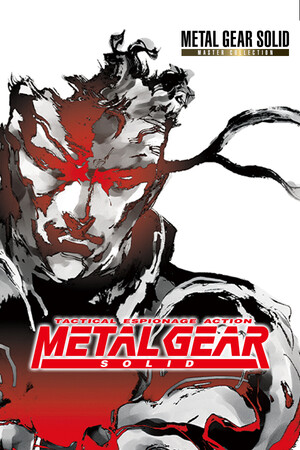
Metal Gear Solid
1998 · Konami
Hideo Kojima broke the fourth wall years before it was a design trope. Psycho Mantis reads your memory card and comments on what you've been playing. The game tells you to plug your controller into port 2 to defeat him. A character gives you a codec frequency that is printed on the back of the physical game case — unavailable to you if you're playing a pirated copy. Metal Gear Solid treated the game medium itself as a gameplay element, and hasn't stopped since.
Crash Bandicoot
1996 · Naughty Dog
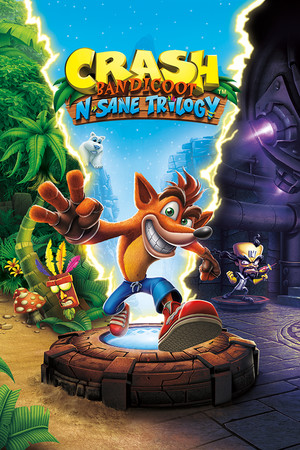
Naughty Dog built Crash Bandicoot as their first PlayStation game and hit an immediate technical wall: the PS1 couldn't render enough 3D scenery at once to support a free-roaming platformer. So they designed the entire game to run away from the camera or toward it. The narrow corridor forced by hardware limitation became Crash's defining aesthetic identity. The N. Sane Trilogy remaster proved the template still works — decades after the constraint that created it was removed.

God of War
2005 · Sony Santa Monica
David Jaffe made God of War because he wanted an action game that felt like a summer blockbuster — giant, loud, cinematic, and unapologetic. Kratos killing the Hydra in the first ten minutes was technically impossible on PS2. It wasn't. God of War pushed PlayStation 2 hardware beyond what Sony's own engineers thought the chip could do, and the result was the console's most technically spectacular game shipped one year before PlayStation 3 was announced.
Sonic the Hedgehog
1991 · Sega
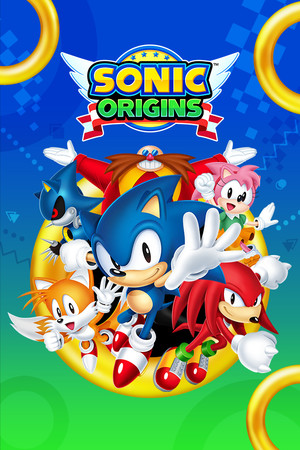
Sega built Sonic specifically to have an answer to Mario — they needed a mascot with attitude, and Yuji Naka's physics engine made momentum feel tangible in a way nothing had before. Sonic can slow down and explore, or he can commit to speed and let the physics carry him through loops and corkscrews. The correct choice is to go. Sonic the Hedgehog was designed to be the fastest thing on a 16-bit screen, and in 1991, it was.

Streets of Rage 2
1992 · Sega
Yuzo Koshiro composed Streets of Rage 2's soundtrack alone, in his bedroom, using algorithmic composition techniques he developed himself to exploit the Genesis FM synthesis chip in ways nobody else had attempted. The music is technically a masterpiece of what a 16-bit sound chip can do. The game itself is the gold standard of beat 'em ups — two-player, four characters, pacing that never stops. But the music is the reason it's still talked about.

Gunstar Heroes
1993 · Treasure
Treasure was formed by ex-Konami developers who wanted to make games without corporate creative constraints. Gunstar Heroes was their debut — a run-and-gun with a weapon combination system that created exponentially varied loadouts, screen-filling boss sequences, and a co-op mode that matched Streets of Rage for chaos and beat it for creativity. The Genesis had no business rendering what Gunstar Heroes asked it to render. It did anyway.

Tetris
1989 · Alexey Pajitnov / Nintendo
Alexey Pajitnov designed Tetris in 1984 on a Soviet Elektronika 60 computer in Moscow, and it spread through the USSR on floppy disks before the West saw it. Nintendo bundled it with the Game Boy. The combination made the Game Boy dominant for a decade. No game has ever been as universally played across every age, culture, and level of gaming experience. Tetris is the proof that a perfect game concept is perfect forever — and the Game Boy version remains the definitive edition.

Pokémon Red / Blue
1996 · Game Freak
Satoshi Tajiri designed Pokémon from his childhood obsession with collecting insects — the link cable between two Game Boys was the net you used to trade what you caught. Game Freak was nearly bankrupt when Red and Blue shipped. Nintendo wasn't sure it would sell. The franchise they accidentally built became the highest-grossing media property in history, surpassing Star Wars, Marvel, and Hello Kitty. It started with a boy, a starter Pokémon, and a cable.
The Legend of Zelda: Link's Awakening
1993 · Nintendo
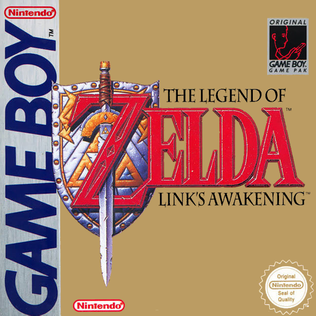
The first Zelda not set in Hyrule was started as an unofficial side project by a small team working on Game Boy hardware they weren't supposed to be using. Link's Awakening is set on Koholint Island, which may or may not exist. The ending — which we won't spoil — is the most emotionally resonant conclusion in the Game Boy library and one of the most surprising in the entire Zelda series. It also has a cameo from a Yoshi doll, a Chain Chomp, and a Kirby enemy.
Half-Life 2
2004 · Valve
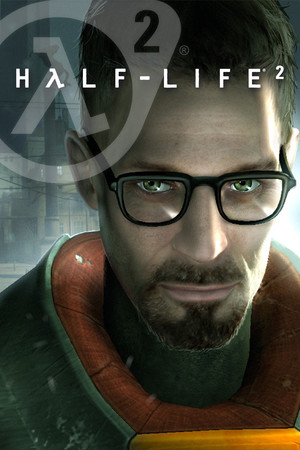
Valve shipped Half-Life 2 with the Source physics engine, which made the world feel like a real place for the first time in an FPS — you could pick up a radiator and use it as a shield, stack crates to reach a ledge, or just throw a toilet at a soldier. The story never once stopped for a cutscene. Gordon Freeman never spoke. Every design decision was deliberate, invisible, and radical. Half-Life 2 is the game every subsequent FPS spent a decade trying to catch.
Portal
2007 · Valve
GLaDOS was not the villain of Portal's original design — she was added late in development as a dry, mechanical testing-facility voice that would react to the player's progress. She became one of the most memorable characters in gaming. 'The cake is a lie' became shorthand for an entire generation's relationship with corporate deception. Portal proved that a first-person perspective could carry a puzzle game and a narrative simultaneously — and that a game could be three hours long and still be complete.

Halo: Combat Evolved
2001 · Bungie
Halo didn't begin on Xbox. Bungie showed it at Steve Jobs' Macworld keynote in July 1999 — a third-person Mac and PC action game set on a mysterious ring world. The crowd went wild. Microsoft acquired Bungie a year later, shelved the Mac version, and turned it into the Xbox launch title that would define the console. Before Halo, first-person shooters were considered fundamentally unsuited to controllers. Bungie's launch title proved otherwise. The pistol was overpowered, the Library was miserable, and none of it mattered. The Flood reveal, the warthog escape, the scale of the Halo ring — everything that followed in AAA console FPS, from Call of Duty to Destiny, traces back to what Apple almost shipped first.
Halo: Combat Evolved
2003 · Bungie / Westlake Interactiv…
Before Halo was an Xbox game — before Microsoft even owned Bungie — Steve Jobs walked onto the Macworld stage in July 1999 and introduced it as the future of Mac gaming. The crowd erupted. It was a third-person action game then, with a ring world, alien enemies, and Bungie's signature feel. A year later Microsoft acquired Bungie, cancelled the Mac version, and repurposed Halo as the Xbox launch title. When Bungie finally shipped the Mac port in 2003, it was a footnote. The Xbox version had already changed console gaming forever. Velocity runs it through GPTK4 — the way it was always meant to run on Apple hardware.
The Elder Scrolls V: Skyrim
2011 · Bethesda
Skyrim shipped on 11/11/11 and within hours was the most talked-about game on the internet. Open-world RPGs existed before it, but none had been this large or this densely detailed — every dungeon handcrafted, every hold with its own politics. Bethesda has released Skyrim on nine separate platforms, including Amazon Alexa. More people have played Skyrim than any other single-player RPG in history. The modding community has effectively been building a second game on top of it for 13 years.

Cuphead
2017 · Studio MDHR
Two brothers — Chad and Jared Moldenhauer — spent seven years and their life savings making Cuphead by hand-drawing every frame in the style of 1930s Fleischer Studios animation. The result is the most visually distinct game released in the last decade. It is also extremely hard. The hand-drawn bosses are enormous, aggressive, and meticulously animated. The difficulty is the point — you are playing an art film that hits back.
Hades
2020 · Supergiant Games
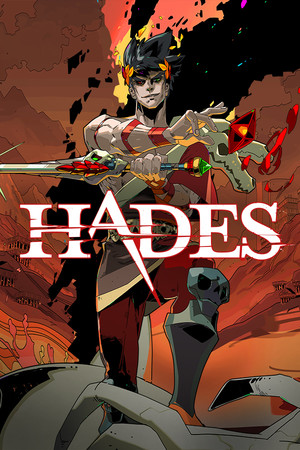
Supergiant built Hades around a structural problem: roguelikes require repetition, but narrative requires progress — and the two seem incompatible. Their solution was to make death part of the story. Zagreus dies, returns to the House of Hades, talks to its residents, and they remember everything. The characters develop across dozens of runs. Hades is simultaneously the best-feeling action game of its year and a master class in how to make repetition meaningful.
Forza Horizon 5
2021 · Playground Games
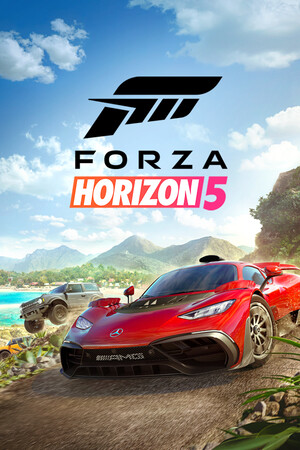
Playground Games set Forza Horizon 5 in Mexico and built one of the most visually dense open worlds ever put in a racing game — active volcanoes, jungle, desert, coastline, and a full festival circuit in a single map. There are over 500 cars, each modeled with obsessive accuracy. But what makes it stand out is how little friction there is: every event, every car, every corner of the map is designed to be picked up and enjoyed immediately. It runs on Velocity via GPTK4 on M1 and later — the Apple Silicon GPU handles it with room to spare.
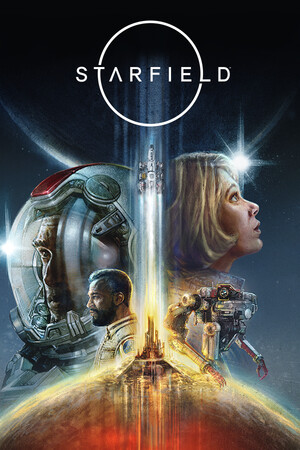
Starfield
2023 · Bethesda Game Studios
Bethesda spent eight years building Starfield — their first original IP since The Elder Scrolls in 1994. It's a space RPG with over 1,000 planets, a deep character system, and Bethesda's signature approach to world design: everywhere you look, someone left something worth reading. The main story is about the Constellation, an explorer's guild searching for alien artifacts, but the real game is the emergent one — picking a faction, building a ship, exploring a colony, and finding the corners of the universe no mission marker points to.
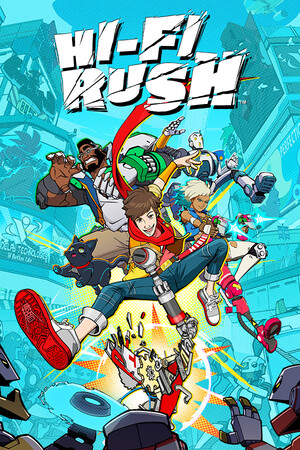
Hi-Fi Rush
2023 · Tango Gameworks
Tango Gameworks shadow-dropped Hi-Fi Rush at a January 2023 Xbox showcase with no prior announcement, and within 24 hours it was the most-talked-about game of the year. The concept is absurdly ambitious: every enemy, every animation, every platform, every particle effect moves in sync with the soundtrack. The result is a game that feels like playing inside an animated music video. It was a critical and commercial hit that nobody saw coming — and Tango Gameworks was shut down by Microsoft four months after launch, making it a particularly bitter legacy.
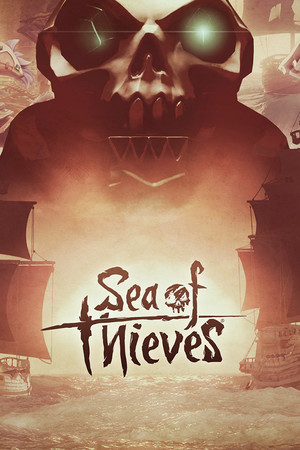
Sea of Thieves
2020 · Rare
Rare built Sea of Thieves around a single idea: a pirate game where the emergent stories matter more than the scripted ones. There are no stats, no loot tiers, no gear progression — just ships, treasure, and other players. The result is a game that generates memories instead of rewards. Every session produces something nobody planned: a kraken attack at the worst possible moment, a rival crew that turned out to be friendly, a storm that wrecked the plan and made it better. Five years of updates have made it one of the most continuously improved live games on any platform.
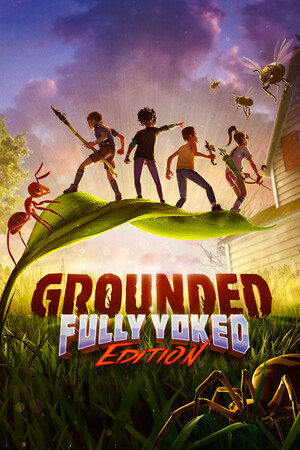
Grounded
2022 · Obsidian Entertainment
Obsidian's concept for Grounded was simple and strange: you've been shrunk to the size of an ant in a suburban backyard, and now you need to survive. The scale transforms the ordinary into the alien — a blade of grass is a tower, a spiderweb is a death trap, a garden hose is a highway. The survival loop is polished and satisfying solo, but the game reveals itself in co-op: four players building a base out of acorn caps and dandelion fibers, getting ambushed by a wolf spider, and barely making it back. Obsidian quietly made one of the best co-op survival games in years.
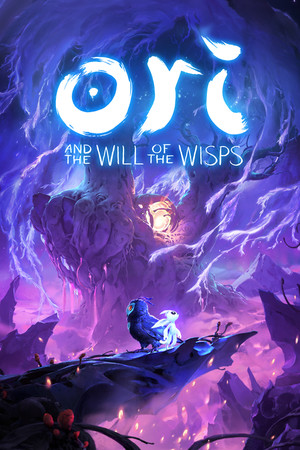
Ori and the Will of the Wisps
2020 · Moon Studios
Moon Studios spent five years on Will of the Wisps after Blind Forest, and the result is one of the most technically and artistically ambitious platformers ever shipped. Every frame is hand-painted at 4K. The movement system is fluid beyond almost anything else in the genre — Ori flows through environments rather than jumping through them. The score by Gareth Coker is orchestral and reactive, swelling to match the action in real time. It is also genuinely emotional in a way most games don't attempt. Will of the Wisps is the kind of game you recommend to people who say they don't play games.
God of War: Chains of Olympus
2008 · Ready at Dawn
Ready at Dawn shipped Chains of Olympus on hardware that was never designed to run God of War — and somehow pulled it off. The result was a console-quality action game in handheld form, with production values that stunned players in 2008. It follows Kratos during his years of servitude to the gods, darker and tighter than the PS2 trilogy, with a final act that left people speechless. PPSSPP renders it at full HD on Apple Silicon with zero issues — sharper than the hardware it was designed for.
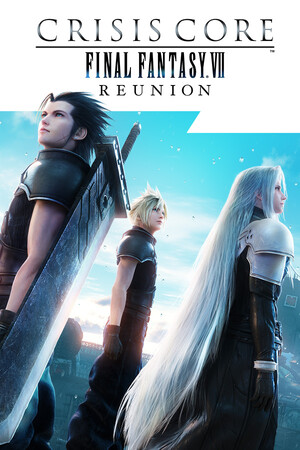
Crisis Core: Final Fantasy VII
2007 · Square Enix
Crisis Core is the prequel to Final Fantasy VII — Zack Fair's story, the SOLDIER program, and everything that happened before Cloud arrived in Midgar. Square Enix built it for PSP in 2007 and it was one of the rare handheld games that felt like a mainline entry. The story ends exactly where FFVII begins, and if you've never played it, the opening of FFVII hits differently after you do. The 2022 Reunion remaster brought full 3D visuals and voice acting — and runs on Velocity via GPTK4.
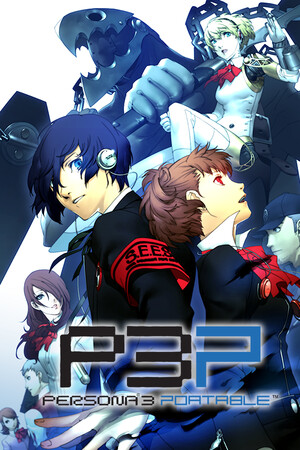
Persona 3 Portable
2010 · Atlus
Persona 3 is where the series found its voice: a high school RPG about mortality, social bonds, and fighting monsters that appear at midnight. The Portable version compressed the full experience onto PSP and added a female protagonist route that reframes the entire story. Atlus released a PC port on Steam in 2023 — through GPTK4 it runs perfectly on Mac. If you've only played Persona 5, start here. P3's ending is one of the most affecting finales in JRPG history, and it earns every moment of it.